Founder Interview
In Conversation with Late S. R. Balasubramanian
A preserved interview with the Founder President of IS India, reflecting on the origin, early struggles, contribution, and future direction of CIOs Of India.
Archive
A conversation from the forum’s memory
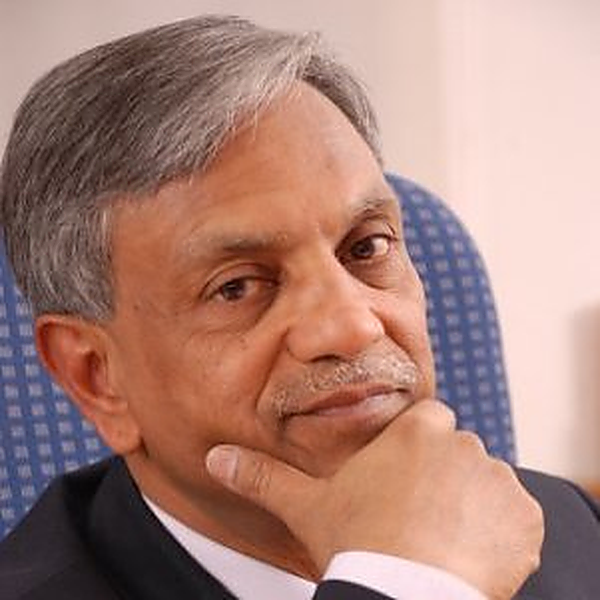
S. R. Balasubramanian was a celebrated CIO and worked in many corporates before becoming an independent consultant providing consulting services to organisations on IT strategy and management. He was also the Founder President of IS India, the forum that later evolved into Information System Managers' Forum and is now branded as CIOs Of India.
He remained President of the group for a long period and played a central role in steering the forum through its formative years. His leadership helped the association survive, build credibility, and become recognised as an independent CIO-led platform.
This interview was conducted by Kamal Karnatak on 13 August 2015. It captures S. R. Balasubramanian's reflections on the founding idea, early challenges, national ambitions, contribution of the forum, family connect, and his advice for future CIOs.
Interview
The Conversation
Kamal Karnatak: How did the idea of founding a group of CIOs or information systems managers come to you? Who were part of the initial team?
S. R. Balasubramanian: The real founder was H. Balasubramanian. He was prompted to work on this idea by Late Dewang Mehta, Secretary of NASSCOM. H. Bala then got some of us together. When the first formal committee was formed, I was elected as the President of the Association.
The thinking at that time was to get all CIOs together on one platform in order to improve their lot, act as a representative of the user industry, and also become a representative body of the end-user industry to help influence government policy making for the IT industry. MAIT and NASSCOM already existed, but there was a need for a platform representing the user side.
The initial team consisted of H. Balasubramanian of Modi Xerox, myself, K. V. Krishnamurthy of Ranbaxy, Ashok Wahi of Nestle, K. K. Nigam of Milkfood, Indrani Ghosh of Oberoi Hotels, G. V. N. Shastry of Maruti, Rajiv Chawla of Indian Oil, and Murli Menon and Vinita Chawla of Computerworld.
Kamal Karnatak: What were the difficulties you and other IT managers faced at that time?
S. R. Balasubramanian: There was not much participation, though everyone liked the idea of such a group. Some did attend our events, but our call for volunteers to come forward and help run the association did not evoke much response. We had to make several calls to ensure people attended events.
During those initial years, most members were EDP managers who were busy processing data and churning out reports. They did not necessarily nurture lofty ambitions to do well and rise up the ranks.
Kamal Karnatak: This group was formed in 1996 but formally registered in 2006. Why did registration take that much time?
S. R. Balasubramanian: The group was formally launched in 1996 and ran as an association of persons. At a time when we were trying to stand upright, getting registered was not on the top of our minds.
With meagre membership collections and a small collection from sponsored programs, the group was able to carry on. Later, when service tax became a statutory levy and sponsors had issues, we had to get formally registered. This was done in 2006.
Kamal Karnatak: Why was CIOs Of India limited to Delhi/NCR? Did you think of expanding it to other cities?
S. R. Balasubramanian: The name coined, IS India, was with the intent of getting all CIOs of the country together. The start was made in Delhi, and the plan was to extend to other centres.
H. Bala met CIOs in Mumbai, Bangalore, and Calcutta during his official tours. I also met CIOs of various cities during seminars and encouraged them to form groups in their cities, which could then be supported through an apex body in Delhi.
The follow-up, however, suffered because within a short time after the formation, most founding members left either due to transfers to other cities or for personal reasons. With very little support, the association was left fighting for survival. We were perhaps a little early in the times, as CIOs from other cities could not realise the potential of such a grouping. We had to leave our all-India ambition and work to save the group in Delhi.
Kamal Karnatak: What are your thoughts on connecting students with CIOs Of India?
S. R. Balasubramanian: I am not sure how we will manage this and how it will be useful to us. Students' expectations will primarily be internships and placements. It may be better to tie up with educational institutions and reach students through them rather than run a program on our own.
Kamal Karnatak: What are the major contributions of the group in the past two decades?
S. R. Balasubramanian: Till 2005, this was the only CIO group in India that could hold on its own and sustain itself for over a decade. The association was independently run by CIOs without being influenced by vendors or media groups. This was unique.
The association was successful in getting CIOs on a single platform and became well-known in IT circles across the country. Successful seminars and internal meetings on knowledge and experience sharing made the association a body of great credibility. Vendors and media groups recognised us and made us partners in their programs.
Kamal Karnatak: How do you see the group in the future?
S. R. Balasubramanian: The group has to evolve with the times. The environment has changed considerably, and the role of IT and CIOs has evolved into a form very different from what it was in the past. The group has to think deeply and brainstorm to redefine its identity to stay relevant.
The thinking has to have a professional focus without being affected by social events, which seem to have taken precedence today. The push should be towards excellence in our performance.
The group should define formal systems, including clear articulation of objectives and goals, a governing body with defined roles, a schedule of meetings, formal agendas, recording of minutes, an activity chart, and monitoring action on them. Informal interactions give it a non-serious look.
We call ourselves CIOs, but are not sure how many of us really fit the bill. It is here that we need external input so that the community understands its drawbacks and works towards the desired state.
Kamal Karnatak: What would you have done differently for CIOs Of India?
S. R. Balasubramanian: A difficult question. I could perhaps have taken help from external resources such as media houses, management institutions, professors, and others, and made it into a joint program with participation from these players without deviating from our core objectives.
I think depending on CIOs alone was our undoing, as they are by nature risk-averse and not business-minded. We did not have enough leaders in our community.
Kamal Karnatak: CIOs Of India events are different from other similar groups because the focus is on technologies, while others are typical vendor marketing presentations. Did you face difficulty in convincing vendors for sponsorship?
S. R. Balasubramanian: We did not really face problems, though it took effort to convince them and get them on board. They understood, and some of them acknowledged that by not making an express pitch for their products, their pitch actually worked better, and they received serious enquiries from our members after the seminar.
Our seminars were different because the content was usually vetted by our seminar committee.
Kamal Karnatak: One of the strong points of CIOs Of India is family connect. How did the idea of connecting families come about?
S. R. Balasubramanian: Family connect was very important, and it really brought CIOs and their families closer. Our initial get-togethers were low-key and not pompous. We even had picnics at outside locations. This worked very well and led to close bonding.
Subsequent meets became bigger as membership expanded and we got sponsors, but events were still sober and the emphasis was on networking. Outside formal events, we formed small groups and had family get-togethers at our homes by turn.
Later, formal family events became huge affairs, richly funded by sponsors and run by outside anchors. The events had more fun and frolic but less connect. We have to work on getting the best out of both approaches.
Kamal Karnatak: What is your advice for current CIOs and budding CIOs?
S. R. Balasubramanian: My advice to young and budding CIOs would be to evolve differently and not emulate their older counterparts. They should learn to question the present setup and roles and try to play a more meaningful role in their organisations.
They should use this forum to get ideas from the external world and invite thinkers and industry experts to share their views on the changing scenario, both from the management perspective and the technology angle. They should participate more in this forum and try to chart a clear path for this association.
Kamal Karnatak: Thank you very much for finding time for this interview and for sharing your frank opinion.
S. R. Balasubramanian: Pleasure is all mine.
Legacy
Why this interview matters
This interview is an important part of the CIOs Of India archive because it captures the founding spirit directly from the Founder President. It shows that the forum was not created as an event platform or a vendor engagement vehicle. It was created to bring CIOs together, strengthen the user-industry voice, encourage professional growth, and build a serious peer community.
S. R. Balasubramanian's reflections are also valuable because they are frank. He speaks about the ambition, the limitations, the struggle for participation, the challenge of sustaining a volunteer-led association, and the need for the forum to keep evolving with the times.
For today's members, the interview is both a memory and a reminder. It reminds the community that CIOs Of India was built through voluntary effort, professional seriousness, personal relationships, and a belief that CIOs should help shape the technology ecosystem, not merely respond to it.